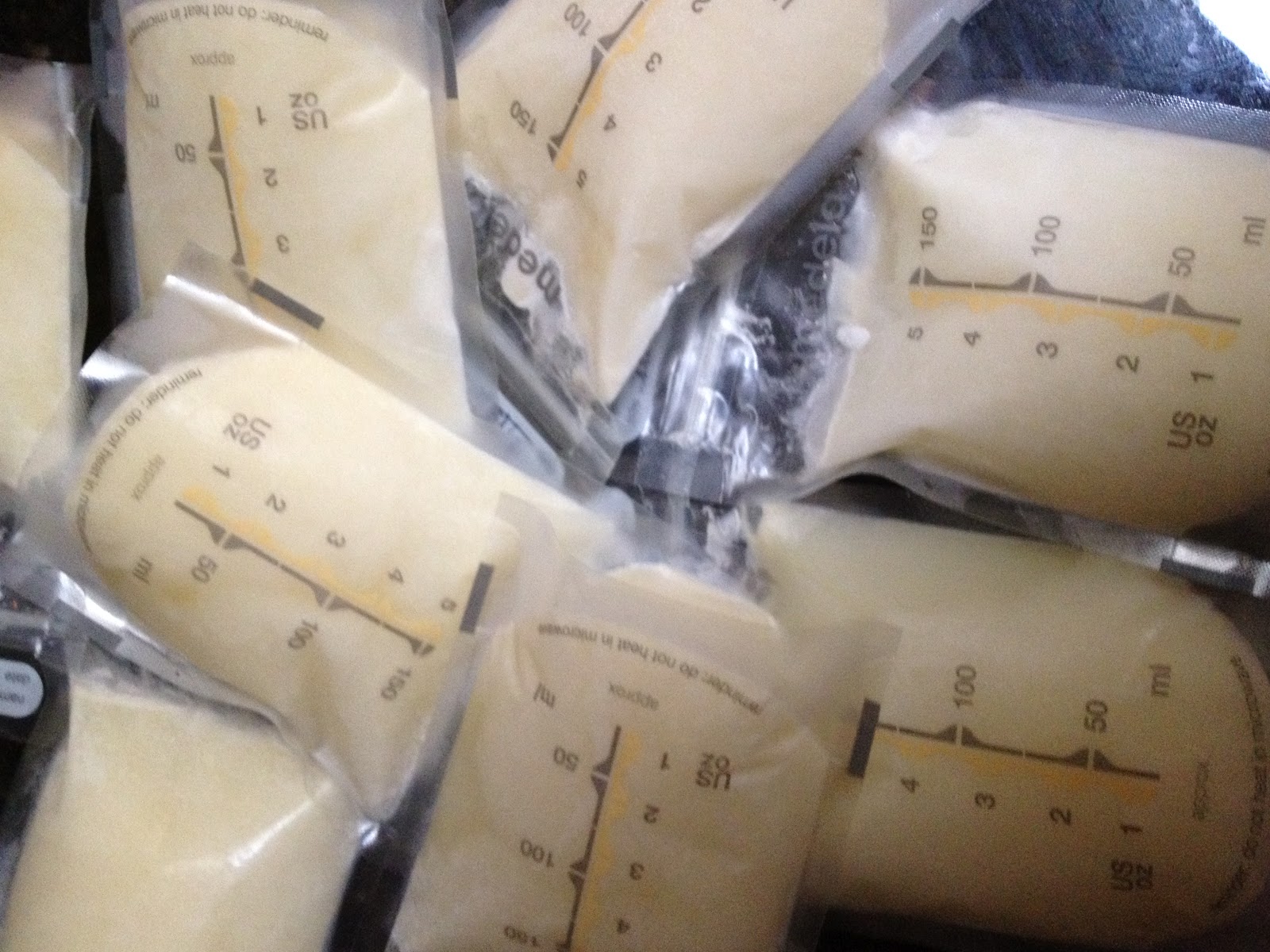
An aspect of excess breastmilk distribution that I've overlooked has come at me full force lately. Selling breastmilk. It's something I haven't discussed before, but I feel the need to look at it more in depth and share some insights.
Among many organizations such as Human Milk 4 Human Babies (HM4HB) and Eats on Feets, selling breastmilk is not allowed. Members may be potentially removed or banned if they are found to be selling their milk. Many people believe it is unethical to be selling and turning a profit from a vital need of many babies and feel moms should only donate if they have excess milk. It is often believed that breastmilk is a right and not a privilege so it should be available to all babies, not just for moms that can pay for it when they are unable to produce enough on their own or have medical complications that prevent them from nursing.
On the flip-side of the situation, for many, selling milk is a way to supplement income. Single income families may find it difficult to meet the demands of life and any extra income may help. Those without insurance may need help with medical bills. Some moms may simply want to guarantee they are compensated for the cost they put in to pumping for milk collection bags and pump components since not all recipients offer or are able to help cover costs. There are countless scenarios that exist that may cause a mom to seek this as an option, it's not "one size fits all" and as such, it's often easier to adopt an "all or nothing" opinion on the matter.
Still, there are moms on the buying end that may need consideration. What would make a mom buy milk when they can get it for free? For some, they may be unaware of milksharing organizations like HM4HB or Eats on Feets. They may not find donors on those sites if they are aware they exist. One mom I donated to had no other respondents to her milk requests despite several postings. Buying may be a last option for some moms, but it's there, and when it often costs half the price they'd pay for milk from a milk bank, it's worth it.
I have mentioned in a previous post some of the ugly sides of donating milk from a personal stand point, but when money enters the picture of milk donation, it can get even uglier. There are some truly unethical practices that can and do occur when it comes to the distribution of excess breastmilk. It is eye-opening and moms on all side of breastmilk distribution need to be aware it happens.
Some moms feel they are doing the right thing by donating with no monetary gain when they donate to some milk banks. Sadly, there are many organizations that collect milk that eventually is sent to a for-profit milk bank, essentially, someone is making money off of milk they gave for free and with the best intentions. In some cases, the collection organization is making money when the for-profit milk bank buys it from them (you can read more about that here). The company then goes to sell the milk after processing for a much larger fee. While it is true that non-profit milk banks still charge for their milk, they set prices only to cover their costs and they have programs in place to provide milk to babies in need regardless of their family's ability to pay. Many moms are unaware when they give their milk to some places (those not associated with the Human Milk Banking Association of North America), it is being sold - this is especially important to know if the mom does not agree with selling milk.
On the individual end, there also may be some very unsavory practices when people are involved in selling milk. It's hard to imagine that some people that spend the time to pump milk would have unethical practices, but there may be people to get into selling to turn a serious profit and as a result may alter the make-up of the milk like adding cow milk or water to stretch their supply and therefore their profit, a point that was mentioned in an article I read discussing the ethics of milk selling. Still other people could act as a recipient and turn around and sell milk they received for free - similar to the companies doing it, but this time it's an individual. For this reason, many people try to get to know their recipients as much as recipients try to get to know their donors.
For many, selling milk is a good option, just like selling plasma, for others, it's unethical. Until recently, I avoided thinking about it, but now that I have, I'm more educated on some of the ins and outs. Sadly, there is a lot more grey on the topic than black and white, so forming an opinion may not be as easy as it seems. Certainly avoiding those with unethical practices is key in all areas, as are open lines of communication and making sure you have all the information. Whatever your personal opinions on the topic, it's best to make sure you are as informed as possible, which is the case in so many other situations as well.
Friday, July 12, 2013
Monday, April 1, 2013
Care and Handling While Storing Breastmilk
As a donor, care and handling of breastmilk is sort of glazed over. It seems that the biggest concern is storage time so that it is still good when given to the recipient mom or milk bank. There is a little bit more to it that we need to be aware of.
When donating to a milk bank, there are specific instructions in regards to the containers used and care of pump parts. When I was donating to the milk bank, I was instructed to sterilize my pump parts at least once per day. I was also to collect milk in sterilized containers. They preferred that the milk was donated in the containers they provided since they were rigid. This meant I pumped into bottles that were clean and sterilized, then poured it into their containers.
But, what if you don't fill a whole container in one pumping session? What if you have extra? Can you combine? Are there rules for doing so? These are some of the questions that don't often get answered, but here, I will let you know.
You can, in fact, combine samples. I'm slightly type A, so for me to have a partial container was not something I'd stand for. It is best for samples to be the same temperature when combined. You should never add fresh milk to frozen milk, and once thawed milk should not be refrozen. Because of this, the best way to combine samples is by saving partial containers in the refrigerator to attain the same temperature before combining. Just remember, if you do this, the fat is likely to have separated so swirl the milk to mix it. Never shake the milk as you can destroy nutrients doing so (see more info here). Once the milk is combined, and your container full, freeze it. You'll always want to freeze the milk as soon as possible to maintain the integrity of the nutrients. Try not to combine several days' worth of samples. It's best if they come from the same day and you don't want to have milk hanging out for several days before it's frozen.
There is also the question of quantity. How much should be frozen together? Should you fill the bags? What about larger storage containers?
When I was pumping for the milk bank, I was shipped 8 oz. containers. I filled these up to the 8 oz. mark. Most containers should not be filled beyond the top mark because the milk will expand as it freezes, but it is usually acceptable to fill it to the top mark. Most commercially available freezer storage bags (use only ones labeled for breastmilk storage) are available in 5-6 oz sizes. Can you fill them to the top mark? Yes. Should you fill them to the top mark? That depends on where your milk is going. With the milk bank, samples are pooled to achieve an ideal calorie, fat, and protein profile, so maximizing space by filling the containers or bags is probably preferred. When donating to individuals, you may want to freeze in smaller quantities. For most babies, it is recommended that that bottles given are no larger than 3-4 oz., smaller for very young babies. You may want to discuss with your recipient what their preferences are. If they are giving smaller bottles, they may want milk stored in smaller quantities so that less is wasted. Once thawed, the milk is on a 24 hour timer in which it must be used. To avoid wasting it, a mom may prefer smaller quantities. Most donors use breastmilk storage bags (unless they are using containers provided by a milk bank) since these do not have to be returned after use.
How should the containers be frozen? Should bags stand or lay flat?
The manner in which the containers are frozen is personal preference, but you may need to discuss this with your recipient. Obviously if you are using containers from a milk bank (or containers for yourself) this isn't an issue, but with bags, they take the shape in which they were frozen, so position may make a difference. I often leave my bags standing. I do this for no other reason than the fact that they stand easily (I've mostly used the Medela Pump 'n' Save bags which stand upright very easily). Other bags many not stand as well. In addition, freezer space may be at a premium for donors or recipients so laying the storage bags flat may be more desirable. If the milk is being shipped, freezing them flat will facilitate easier packing and allow the use of a smaller shipping container.
Remember through the whole process to handle with care. Frozen containers are very susceptible to damage. They may seem solid, but I can tell you from experience, that they will chip and crack if dropped. I have lost far more than I care to admit because the plastic container slipped from my hands. When using bags, it's not uncommon for sharp frozen edges to cause unseen tears or splits in bags. It is often recommend that storage bags be defrosted in a larger clean bowl to avoid spillage and loss. While donors may not need to worry about that, it is important that the frozen bags you are handling don't get banged or scuffed on surfaces to protect them as much as possible from damaging the bag. The more gently they are handled, the more likely they are to remain fully intact.
Lastly, ensure that your samples are received in a timely fashion. It may be a bit of an ego boost to give a large quantity at a single time (believe me, I've been there), but it's more important that it is given in a timely fashion so that it can be used before the expiration date. Don't wait to donate your milk until it is almost expired. The sooner you can get it out of storage, the better.
I hope these tips help! Happy storing!
When donating to a milk bank, there are specific instructions in regards to the containers used and care of pump parts. When I was donating to the milk bank, I was instructed to sterilize my pump parts at least once per day. I was also to collect milk in sterilized containers. They preferred that the milk was donated in the containers they provided since they were rigid. This meant I pumped into bottles that were clean and sterilized, then poured it into their containers.
But, what if you don't fill a whole container in one pumping session? What if you have extra? Can you combine? Are there rules for doing so? These are some of the questions that don't often get answered, but here, I will let you know.
| Milk will separate after standing for a while |
There is also the question of quantity. How much should be frozen together? Should you fill the bags? What about larger storage containers?
When I was pumping for the milk bank, I was shipped 8 oz. containers. I filled these up to the 8 oz. mark. Most containers should not be filled beyond the top mark because the milk will expand as it freezes, but it is usually acceptable to fill it to the top mark. Most commercially available freezer storage bags (use only ones labeled for breastmilk storage) are available in 5-6 oz sizes. Can you fill them to the top mark? Yes. Should you fill them to the top mark? That depends on where your milk is going. With the milk bank, samples are pooled to achieve an ideal calorie, fat, and protein profile, so maximizing space by filling the containers or bags is probably preferred. When donating to individuals, you may want to freeze in smaller quantities. For most babies, it is recommended that that bottles given are no larger than 3-4 oz., smaller for very young babies. You may want to discuss with your recipient what their preferences are. If they are giving smaller bottles, they may want milk stored in smaller quantities so that less is wasted. Once thawed, the milk is on a 24 hour timer in which it must be used. To avoid wasting it, a mom may prefer smaller quantities. Most donors use breastmilk storage bags (unless they are using containers provided by a milk bank) since these do not have to be returned after use.
How should the containers be frozen? Should bags stand or lay flat?
| Storing bags standing creates an unusual shape which may cause storage issues for recipients. |
Remember through the whole process to handle with care. Frozen containers are very susceptible to damage. They may seem solid, but I can tell you from experience, that they will chip and crack if dropped. I have lost far more than I care to admit because the plastic container slipped from my hands. When using bags, it's not uncommon for sharp frozen edges to cause unseen tears or splits in bags. It is often recommend that storage bags be defrosted in a larger clean bowl to avoid spillage and loss. While donors may not need to worry about that, it is important that the frozen bags you are handling don't get banged or scuffed on surfaces to protect them as much as possible from damaging the bag. The more gently they are handled, the more likely they are to remain fully intact.
Lastly, ensure that your samples are received in a timely fashion. It may be a bit of an ego boost to give a large quantity at a single time (believe me, I've been there), but it's more important that it is given in a timely fashion so that it can be used before the expiration date. Don't wait to donate your milk until it is almost expired. The sooner you can get it out of storage, the better.
I hope these tips help! Happy storing!
Tuesday, February 26, 2013
Crying Over Spilled Milk
At no other time in your life does that cliché hold more weight to it than when you become a breastfeeding mother. Even more so if you are a pumping mom. And, dare I say, even more if you suffer low supply.
There may be no use in crying over spilled milk, but if you reach that point in motherhood, you certainly understand it. I would guess that likely every mom that has pumped has a story to tell about spilling milk and the lament that followed.
I remember one time when I was having a discussion with my sister-in-law as I sat at the table pumping away (yeah, no shame, but really, I did cover myself and block most from view). We were discussing how we both manages to have decent supplies and stating we hardly had a pump session that resulted in less than 5 oz. (times change, and fluctuate, because I can tell you, I've had many since then that were significantly less). In any case, some how, the strap that held the collection/storage bag onto my pump released and the almost full bag dropped to the floor, landed on it's side and ejected almost all of it's contents. After the cleanup and my return to pumping, I was able to squeeze out only another ounce. I was upset. A pumping session that would have resulted in 6 oz. left a meager 1 1/2 oz. At that time, I'd never had such an empty bag after a pumping session. The sad thing is, I was more bothered by my sullied reputation for not pumping a respectable amount. I know I did in fact pump a nice amount, but the loss, in my mind was more about the low total than the actual loss of the milk. Believe me, I know how bad that admission sounds. It makes me seem like a truly horrible person. Even then, I probably didn't realize the real reason I was upset, thinking it was the loss of the milk, or I was in denial about the real reason. The fact of the matter was though, that at the time, I didn't need to pump. I was pumping to create a stash that hardly got used. I was a stay at home mom with my first baby and hardly a reason to leave him. There were all of two times in his exclusive breastfeeding stage where he received bottles. At the time, not only did I not need a sizable stash, but if I lost any, I could always pump more. I had no reason to really be affected by it.
If I'm going to be completely honest I have to admit that I've always taken for granted the fact that I respond well to the pump and that I have oversupply. At least with donating, some good can come of my over-sized ego and sheer narcissism. Even better, those traits drive my competitive side so I try to pump more and donate more, so it's actually resulting in good, right? At least I can try to convince myself of that. Regardless, today, I experienced a huge change in my reaction that maybe means I'm more human than I thought.
I had just finished pumping and was moving the bag of freshly pumped milk to the refrigerator pressing the zipper on the pouch closed as I walked. My three year old appeared in my path and before I knew it, he was reaching up and squeezing the bottom of the pouch expelling milk in the process out of the small portion of the zipper yet to be sealed. Milk squirted out the top of the bag and splattered on the floor. A pain shot through my chest as I looked stunned at what had happened. Tears welled behind my eyes and I started to get choked up. I was so saddened by the situation and couldn't help but to glare at my child who smiled as if proud of what he had done. He then proceeded to lick the milk of the floor and declare, "It's mama milk!"
I certainly have come a long way. In reality, the amount that was spilled was probably less than half an ounce, but it seemed like it may as well have been my whole stash at the time. Things sure have changed over this journey from my first views of breastfeeding, to meeting more breastfeeding and struggling mamas, and now to having participated in donating milk over the past year and a half. I certainly have grown in my views and opinions. I've also learned a lot. I'm much more upset about the loss of milk because I know what some mamas go through to provide it for their little ones. I only hope that I can share that knowledge and the knowledge that even a small amount can be a big help.
There may be no use in crying over spilled milk, but if you reach that point in motherhood, you certainly understand it. I would guess that likely every mom that has pumped has a story to tell about spilling milk and the lament that followed.
I remember one time when I was having a discussion with my sister-in-law as I sat at the table pumping away (yeah, no shame, but really, I did cover myself and block most from view). We were discussing how we both manages to have decent supplies and stating we hardly had a pump session that resulted in less than 5 oz. (times change, and fluctuate, because I can tell you, I've had many since then that were significantly less). In any case, some how, the strap that held the collection/storage bag onto my pump released and the almost full bag dropped to the floor, landed on it's side and ejected almost all of it's contents. After the cleanup and my return to pumping, I was able to squeeze out only another ounce. I was upset. A pumping session that would have resulted in 6 oz. left a meager 1 1/2 oz. At that time, I'd never had such an empty bag after a pumping session. The sad thing is, I was more bothered by my sullied reputation for not pumping a respectable amount. I know I did in fact pump a nice amount, but the loss, in my mind was more about the low total than the actual loss of the milk. Believe me, I know how bad that admission sounds. It makes me seem like a truly horrible person. Even then, I probably didn't realize the real reason I was upset, thinking it was the loss of the milk, or I was in denial about the real reason. The fact of the matter was though, that at the time, I didn't need to pump. I was pumping to create a stash that hardly got used. I was a stay at home mom with my first baby and hardly a reason to leave him. There were all of two times in his exclusive breastfeeding stage where he received bottles. At the time, not only did I not need a sizable stash, but if I lost any, I could always pump more. I had no reason to really be affected by it.If I'm going to be completely honest I have to admit that I've always taken for granted the fact that I respond well to the pump and that I have oversupply. At least with donating, some good can come of my over-sized ego and sheer narcissism. Even better, those traits drive my competitive side so I try to pump more and donate more, so it's actually resulting in good, right? At least I can try to convince myself of that. Regardless, today, I experienced a huge change in my reaction that maybe means I'm more human than I thought.
I had just finished pumping and was moving the bag of freshly pumped milk to the refrigerator pressing the zipper on the pouch closed as I walked. My three year old appeared in my path and before I knew it, he was reaching up and squeezing the bottom of the pouch expelling milk in the process out of the small portion of the zipper yet to be sealed. Milk squirted out the top of the bag and splattered on the floor. A pain shot through my chest as I looked stunned at what had happened. Tears welled behind my eyes and I started to get choked up. I was so saddened by the situation and couldn't help but to glare at my child who smiled as if proud of what he had done. He then proceeded to lick the milk of the floor and declare, "It's mama milk!"
I certainly have come a long way. In reality, the amount that was spilled was probably less than half an ounce, but it seemed like it may as well have been my whole stash at the time. Things sure have changed over this journey from my first views of breastfeeding, to meeting more breastfeeding and struggling mamas, and now to having participated in donating milk over the past year and a half. I certainly have grown in my views and opinions. I've also learned a lot. I'm much more upset about the loss of milk because I know what some mamas go through to provide it for their little ones. I only hope that I can share that knowledge and the knowledge that even a small amount can be a big help.
Wednesday, February 6, 2013
Cookies and Milk
I recently received an unexpected surprise. A sweet mama by the name of Kathryn contacted me after seeing my milk donation page, Life Saving Milk, on Facebook and told me about the lactation cookies she makes and wanted to know if I was interested in trying them out. I was thrilled! Many breastfeeding mamas are familiar with lactation cookies, especially if supply has been a problem and they are seeking ways to give it a boost. While the cookies don't make guarantees or medical claims, it's often an easy thing to add to your diet (after all, who doesn't like cookies?) that may help give your supply that little boost it needs.
Kathryn runs a small home-based business, Mason's Milk and Mommy's Cookies, making lactation cookies which she started making for a friend who had supply issues. Kathryn is a milk donor herself. One thing she has made sure to do is make cookies available for mamas (and their babies) that may have food allergies or sensitivities as she and her friend both have certain restrictions in their diets for their little ones. Read more about her story here. She also runs and maintains a Facebook page with the same name as her business.
It is very difficult to decide which variety to choose as she offers over 20 varieties of cookies! Many of these varieties are available free of allergens (as needed) and organic whenever possible (this is slightly restricted if allergies are a concern). Comparatively, Mason's Milk cookies are priced significantly lower than some popular commercial brands and according to Kathryn, contain far more galactagogues (supplements, often in the form of herbs and seeds, that may boost milk supply). While certain galactagogues may work individually, many mamas find that they work better in combination with others (of course, it's always a good idea to check with a lactation consultant or health care provider to see if any of these should be avoided should you have any medical conditions that cause them to be contraindicated). Kathryn also offers a dry mix in addition to all the premade cookies so you can make some up yourself.
I decided on the American cookies (blueberries, white chocolate chips, and cranberries) and received them a few days after they'd been shipped out and I was pleasantly surprised at the speed of delivery. As recommended, I transferred the bag of cookies to a zip top bag to maintain freshness. I forgot about the recommended schedule for the cookies, which is available on the website, and went to munching. They were delicious! Certainly difficult to maintain the one cookie a day (after the first couple of days) recommendation. What can I say, they are yummy and I have no self control.
After my limited exposure (and my slip-up on the consumption schedule) it's hard to say if they helped boost my supply. It was also that time of the month and I, like many women, experienced a dip in supply so sadly, it was a bad time to judge that. I suppose I'll have to think about getting more cookies.
For the most part though, for a breastfeeding mom with supply issues, one that wants to boost supply for donating, or really, any mom that wants a good excuse to eat tasty cookies, I'd definitely say check them out. Use caution though, as I mentioned before, certain galactagogues can be contraindicated so be sure what you are getting. Also, if donating to a milk bank, they may have restrictions about consumption of supply boosting supplements so be upfront with them about what you are taking, even in the form of cookies or teas. Happy munching!
Monday, February 4, 2013
Pumps, Pumps, Pumps
It seems these days that when a mom is expecting and planning on breastfeeding, a breast pump soon becomes a "must have" item. A lactation counselor I know says it's actually better to wait until after the baby is born to find a pump that will suit your needs when they arise. Part of this is because in the first couple of weeks it's important to establish breastfeeding with the baby and not worry about pumping. If needed, that can come later. Some women never have need of a pump. With new changes to healthcare requirements, pump ownership may become more popular. And of course, if you are like me, you'd encourage pump ownership simply for the sake of donating. This was the main use of my pump with my second.
I received my pump as a gift from my mother-in-law. She's an IBCLC and made sure to get me a high quality pump. I use a Medela Pump In Style Advance. It really is a wonderful work horse. It's the only pump I can comment on as far as quality and how it works since it's the only one I've used, but it's not the only pump out there. It is very popular for a reason, but there are other choices.
The first thing to think about when you are considering a pump is that some moms don't respond to the pump well or at all. That's ok. Our bodies are made to respond to a suckling baby, not plastic cones mimicking the movement. Unfortunately, many women don't realize this and think that if they only pump a small amount that they are having supply issues. Pumping small amounts is never an indication of supply problems. The normal amount women pump is 1/2 - 2 oz. for both breasts combined per session that lasts 20-30 minutes. Many women find that as time goes on, they respond better and better to the pump (usually after multiple daily pumping sessions), but not all women find this to be true. It's important not to be discouraged. If you need to pump and provide expressed milk for your baby, consider increasing the number of pumping sessions. If you are simply building a stash or pumping to donate, just go with whatever works into your schedule. Any little bit helps. No matter your pumping situation, if you encounter problems, low yield, pain while pumping, etc., always seek the help of a lactation consultant. They are trained to not only help with breastfeeding, but also pumping and may be able to help you with positioning, making sure parts are sized correctly for you, etc.
So, when comparing pumps, here are a couple of things to consider. Think about what you want and what will work best for you.
Type of Pump
There are two basic types of pumps hospital grade and personal. Hospital grade pumps are typically the most powerful pumps available. They are owned by hospitals and other pump locations/nursing centers and typically rented out. Most moms don't use these for an extended period of time - usually only if providing for a baby that must remain in the NICU. If a pump is needed for extended use, like for moms that go back to work or those donating, a personal pump is usually preferred. These are a bit less powerful and vary based on manufacturer, but they are smaller and more convenient to carry around.
Pumping Mechanism
There are three different types of "pumping mechanisms" as I'll call them for pumps. Pumps come in manual, single electric, or double electric. A manual pump is just that. It is a pumping mechanism with a "trigger" like you find on spray bottles. The top attaches to a bottle or other collections container. As you pull on the trigger, milk will be drawn out and collected in the container. Manual pumps are great for their compact size and affordability Many moms will get one of these as their starter pumps or if they are only going to be pumping a limited amount. Single electric pumps are electric pumps that will pump one breast at a time. They are electrically run so they are more powerful than a manual pump. Pumping may take more time since only one breast can be pumped at a time, but the cost savings can be a bonus. Double electric pumps allow for pumping both breasts simultaneously. These pumps are the most popular for working moms and other moms that pump multiple times a day because of the time savings. Some offer the ability to pump only one or both breasts at a time which is a nice feature.
Pumping System
Electric pumps come in one of two types of systems. This is a very important aspect to examine when choosing a pump and is often the most overlooked. Pump systems are either open systems or closed systems. While the style of system may or may not affect the efficiency/efficacy of pumping, it makes a difference to many moms who may be looking for a deal on pumps. An open system pump is a single user pump. It should always be purchased brand new and never sold or donated. With proper use, no milk should ever get into the electronics, but it is built without a mechanism to block any contamination of the parts so it they are never to be given to another user for hygienic purposes. Many "experiments" have been done where pumps of this style have been opened up and growths found which can not be cleaned out. It sounds gross, but since the pumped milk never comes in contact, it doesn't affect the milk, but it can pose health risks if shared by another mom. Similar to toothbrushes - you can reuse yours over and over, but you wouldn't want to use someone else's. These pumps may be more affordable or effective depending on the manufacturer and since some moms plan to use pumps for multiple children (and often run it down anyway after multiple kids), the single user requirement is a non-issue. Closed system pumps have a sort of cut-off that prevents anything from entering the electronics chamber in the unlikely event that milk or other contaminants go beyond the pump attachments. This is the system used for hospital pumps which is what allows them to be rented and used by multiple moms. Each mom simply purchases a new attachment kit. In the case of closed system personal pumps, these pumps can be used by multiple moms, purchased used, sold or donated after use. In most cases, these pumps are safe to use as long as the new user purchases their own pump attachments. Users may find that these pumps are more expensive than others depending on the manufacturer.
In addition to what I mentioned above, different pumps will have additional features or traits that make them more able to tailor to your needs. Some of these features may include a battery pack, car hook-up, and hands-free features. Some pumps come with parts and additional "goodies" that should factor into cost such as storage bottles, bottle cooler, and pump attachments.
In many cases, moms find that you pay for what you get. As a general rule, more expensive pumps are often more efficient and easier to use, but that doesn't mean there aren't other good quality pumps at lower prices. It's a good idea to talk to pumping moms that will have the same type of pumping requirements or habits to see what they use and which ones they like. Another option is to consult a lactation consultant as they will be able to help you choose a pump that suits your needs as well. Happy pumping! And remember, if you have extra stash or can donate some extra pumping time, NICU babies and other babies that are unable to get milk from their own mom will greatly appreciate your efforts and donations.
I received my pump as a gift from my mother-in-law. She's an IBCLC and made sure to get me a high quality pump. I use a Medela Pump In Style Advance. It really is a wonderful work horse. It's the only pump I can comment on as far as quality and how it works since it's the only one I've used, but it's not the only pump out there. It is very popular for a reason, but there are other choices.
The first thing to think about when you are considering a pump is that some moms don't respond to the pump well or at all. That's ok. Our bodies are made to respond to a suckling baby, not plastic cones mimicking the movement. Unfortunately, many women don't realize this and think that if they only pump a small amount that they are having supply issues. Pumping small amounts is never an indication of supply problems. The normal amount women pump is 1/2 - 2 oz. for both breasts combined per session that lasts 20-30 minutes. Many women find that as time goes on, they respond better and better to the pump (usually after multiple daily pumping sessions), but not all women find this to be true. It's important not to be discouraged. If you need to pump and provide expressed milk for your baby, consider increasing the number of pumping sessions. If you are simply building a stash or pumping to donate, just go with whatever works into your schedule. Any little bit helps. No matter your pumping situation, if you encounter problems, low yield, pain while pumping, etc., always seek the help of a lactation consultant. They are trained to not only help with breastfeeding, but also pumping and may be able to help you with positioning, making sure parts are sized correctly for you, etc.
So, when comparing pumps, here are a couple of things to consider. Think about what you want and what will work best for you.
Type of Pump
There are two basic types of pumps hospital grade and personal. Hospital grade pumps are typically the most powerful pumps available. They are owned by hospitals and other pump locations/nursing centers and typically rented out. Most moms don't use these for an extended period of time - usually only if providing for a baby that must remain in the NICU. If a pump is needed for extended use, like for moms that go back to work or those donating, a personal pump is usually preferred. These are a bit less powerful and vary based on manufacturer, but they are smaller and more convenient to carry around.
Pumping Mechanism
There are three different types of "pumping mechanisms" as I'll call them for pumps. Pumps come in manual, single electric, or double electric. A manual pump is just that. It is a pumping mechanism with a "trigger" like you find on spray bottles. The top attaches to a bottle or other collections container. As you pull on the trigger, milk will be drawn out and collected in the container. Manual pumps are great for their compact size and affordability Many moms will get one of these as their starter pumps or if they are only going to be pumping a limited amount. Single electric pumps are electric pumps that will pump one breast at a time. They are electrically run so they are more powerful than a manual pump. Pumping may take more time since only one breast can be pumped at a time, but the cost savings can be a bonus. Double electric pumps allow for pumping both breasts simultaneously. These pumps are the most popular for working moms and other moms that pump multiple times a day because of the time savings. Some offer the ability to pump only one or both breasts at a time which is a nice feature.
Pumping System
Electric pumps come in one of two types of systems. This is a very important aspect to examine when choosing a pump and is often the most overlooked. Pump systems are either open systems or closed systems. While the style of system may or may not affect the efficiency/efficacy of pumping, it makes a difference to many moms who may be looking for a deal on pumps. An open system pump is a single user pump. It should always be purchased brand new and never sold or donated. With proper use, no milk should ever get into the electronics, but it is built without a mechanism to block any contamination of the parts so it they are never to be given to another user for hygienic purposes. Many "experiments" have been done where pumps of this style have been opened up and growths found which can not be cleaned out. It sounds gross, but since the pumped milk never comes in contact, it doesn't affect the milk, but it can pose health risks if shared by another mom. Similar to toothbrushes - you can reuse yours over and over, but you wouldn't want to use someone else's. These pumps may be more affordable or effective depending on the manufacturer and since some moms plan to use pumps for multiple children (and often run it down anyway after multiple kids), the single user requirement is a non-issue. Closed system pumps have a sort of cut-off that prevents anything from entering the electronics chamber in the unlikely event that milk or other contaminants go beyond the pump attachments. This is the system used for hospital pumps which is what allows them to be rented and used by multiple moms. Each mom simply purchases a new attachment kit. In the case of closed system personal pumps, these pumps can be used by multiple moms, purchased used, sold or donated after use. In most cases, these pumps are safe to use as long as the new user purchases their own pump attachments. Users may find that these pumps are more expensive than others depending on the manufacturer.
In addition to what I mentioned above, different pumps will have additional features or traits that make them more able to tailor to your needs. Some of these features may include a battery pack, car hook-up, and hands-free features. Some pumps come with parts and additional "goodies" that should factor into cost such as storage bottles, bottle cooler, and pump attachments.
In many cases, moms find that you pay for what you get. As a general rule, more expensive pumps are often more efficient and easier to use, but that doesn't mean there aren't other good quality pumps at lower prices. It's a good idea to talk to pumping moms that will have the same type of pumping requirements or habits to see what they use and which ones they like. Another option is to consult a lactation consultant as they will be able to help you choose a pump that suits your needs as well. Happy pumping! And remember, if you have extra stash or can donate some extra pumping time, NICU babies and other babies that are unable to get milk from their own mom will greatly appreciate your efforts and donations.
Wednesday, January 16, 2013
The Ugly Side of Milk Donation
I wish I could say that donating milk is an entirely altruistic endeavor. Maybe it started that way, but to be honest, I've noticed some traits developing in myself that aren't desirable or respectable. It's sad, really, but it's the truth. Through this journey I have found that at times, donating milk has made me judgmental, competitive, guilt-ridden and full of self deprecation. All things I'd rather leave behind, but it's not really that simple.
I am surrounded by breastfeeding moms. I subscribe to breastfeeding blogs. I frequent breastfeeding support sites and follow breastfeeding information, support, and activism Facebook pages. Such activities mean that I have a truly enviable support network and access to awesome resources. The judgment creeps in though. It's horrible. I know moms that could be donating but aren't and it bugs me. I don't know their life, I don't know their story, but I can't help but wonder why they aren't donating. It's even worse, when I hear about moms with oversupply that don't donate. When they talk about methods to decrease supply, it really gets me. I feel anger creeping in. It's not fair to them, but there it is. Many don't have the time. Many don't know about donation. In the moment though, none of that matters. I just feel it. I have to remind myself to keep my mouth shut (aside from the occasional nudge to consider donation) and later, I can rationalize it to myself again that they aren't bad people. They have their own lives and stories and it may not work for them. And that's ok.
When I was donating to the milk bank, I had them send me the larger containers since I ran out of the small ones they originally provided me with. They informed me that some moms need the bigger containers. I was one of those moms (insert a prideful beaming me). I looked at the amounts that others were dropping off as I'd log my donation in their book when I dropped it off and I was smug about my donation being larger than most of the others. Yep, I'm a bad person. I even called the milk bank and asked them how much moms donated on average. I wanted to make sure I was a top donor. I got a round-about non-specific and non-helpful answer (in all honesty, it's hard to say since the number of one time donors is far greater than the number of repeat donors. Who knows if they actually keep track of the averages like that?). I was determined to be one of the best donors they had. More recently I came across the news report about the mom that had recently broken the record in the Guiness Book for milk donation. I was impressed. And it made me want to do more. I needed to beat that record! But I couldn't. My little one was already over a year and the milk bank doesn't take donations after the baby is a year old. For a flash, I thought I needed to have another baby so I could beat that record. How messed up is that???? Then I decided I'd just pump, pump, pump, and donate record breaking amounts to local moms, until I came across this story of a mom that had donated over 15,000 oz. via milk bank donations and milk sharing and realized that I was nowhere near close to that and needed to up my game again if I was going to be among the top donors. Now, competition in this arena isn't necessarily a bad thing. If it means that you are doing a little bit extra to donate more, it's all the better. In some cases, something's gotta give. If you spend so much time focusing on pumping and donating, your life and family may ultimately suffer. Granted, I didn't go as far as to boost up the galactologues and increase my supply dramatically, but if someone went as far as to do that just for donation, their pocket book would suffer more than it already does if the cost of pumping supplies wasn't being covered. Priorities are important. Family is important. It's not fair for your family to suffer for your pride or that competitive edge.
Seeing reports of moms donating more is double sided. On one hand, the competitive side kicks in. To balance that out, the guilt and self-deprecation seep in too. When I see that someone is able to do so much, I wonder why I am not doing that too. What's wrong with me that I haven't done more? Why did I spend that time reading or playing a game when I could have been pumping? Why did I drop pumping sessions? How selfish am I? It goes on and on. It's not a pretty side of self-reflection. I feel guilty every time I take a break for myself. I feel guilty for not pumping more. I feel guilty that I used to pump 20 oz. per day and now I'm down to about 6. It's my fault too. If I pumped more, I'd get more. I can make excuses and rationalize, and even if those reasons are valid, I still feel like they are just excuses. It's tough. I'm not expecting sympathy, but many times, I've skipped a pumping session and beat myself up about it. I'm constantly thinking I need to go back to pumping as much as I used to so I can be giving more. I feel guilty and selfish. It doesn't go away. Despite the upset I feel towards others that don't donate at all, I still feel like what I'm doing is inadequate.
The whole situation can get ugly. It's important to keep things into perspective and acknowledge limits. Maybe had I set goals and limits from the start it would be easier than this emotional roller coaster. I don't know. I'm attempting to turn my experiences into something positive. I try very hard to not be negative towards other moms that could donate but don't, I try to gently encourage moms to donate that can, I try to spread the word and not brag (too much) about what I've accomplished (there are certainly others that have and will put me to shame). It's a side of milk donation and myself that I never expected to see, but there it is. It keeps creeping back no matter how hard I try to suppress it. It's always there hanging over my shoulder. My hope is that despite my shortcomings, my efforts to encourage others and educate about milk donation do some good.
I am surrounded by breastfeeding moms. I subscribe to breastfeeding blogs. I frequent breastfeeding support sites and follow breastfeeding information, support, and activism Facebook pages. Such activities mean that I have a truly enviable support network and access to awesome resources. The judgment creeps in though. It's horrible. I know moms that could be donating but aren't and it bugs me. I don't know their life, I don't know their story, but I can't help but wonder why they aren't donating. It's even worse, when I hear about moms with oversupply that don't donate. When they talk about methods to decrease supply, it really gets me. I feel anger creeping in. It's not fair to them, but there it is. Many don't have the time. Many don't know about donation. In the moment though, none of that matters. I just feel it. I have to remind myself to keep my mouth shut (aside from the occasional nudge to consider donation) and later, I can rationalize it to myself again that they aren't bad people. They have their own lives and stories and it may not work for them. And that's ok.
Seeing reports of moms donating more is double sided. On one hand, the competitive side kicks in. To balance that out, the guilt and self-deprecation seep in too. When I see that someone is able to do so much, I wonder why I am not doing that too. What's wrong with me that I haven't done more? Why did I spend that time reading or playing a game when I could have been pumping? Why did I drop pumping sessions? How selfish am I? It goes on and on. It's not a pretty side of self-reflection. I feel guilty every time I take a break for myself. I feel guilty for not pumping more. I feel guilty that I used to pump 20 oz. per day and now I'm down to about 6. It's my fault too. If I pumped more, I'd get more. I can make excuses and rationalize, and even if those reasons are valid, I still feel like they are just excuses. It's tough. I'm not expecting sympathy, but many times, I've skipped a pumping session and beat myself up about it. I'm constantly thinking I need to go back to pumping as much as I used to so I can be giving more. I feel guilty and selfish. It doesn't go away. Despite the upset I feel towards others that don't donate at all, I still feel like what I'm doing is inadequate.
The whole situation can get ugly. It's important to keep things into perspective and acknowledge limits. Maybe had I set goals and limits from the start it would be easier than this emotional roller coaster. I don't know. I'm attempting to turn my experiences into something positive. I try very hard to not be negative towards other moms that could donate but don't, I try to gently encourage moms to donate that can, I try to spread the word and not brag (too much) about what I've accomplished (there are certainly others that have and will put me to shame). It's a side of milk donation and myself that I never expected to see, but there it is. It keeps creeping back no matter how hard I try to suppress it. It's always there hanging over my shoulder. My hope is that despite my shortcomings, my efforts to encourage others and educate about milk donation do some good.
Thursday, January 3, 2013
Has it really been that long?
A few days ago, my youngest turned 20 mo. I can't believe he's so close to turning two! In my mind, I'm still in baby phase. Not infant phase, but he's still my baby.
With a 20 mo. old, that also means I've been donating for over a year and a half! That's truly exciting on it's own! I first donated to a local mom while I waited for paperwork to go through with the milk bank. Then, it was 10 mo. with the milk bank starting from when my youngest was 2 mo. old. I continued to donate to the local mama as long as she needed it. When my baby was a year old, I stopped donating to the milk bank (since they give to premature babies and those in the NICU, they don't use mature milk) and began seeking out other local moms that were in need of milk. Through various channels, I found several and have continued my milk donation journey.
To date, I have donated over 4700 oz. to the milk bank and over 2200 oz. to local mamas. Granted, that's no Guinness Record, but I'm sure the recipient babies don't mind. As a result of donation, I've gained 5 "milk children" from local donations and countless anonymous ones via the Milk Bank.
I love being able to help babies in need when I've been blessed with a good supply. I'll keep on going as long as I can. I have no idea when the journey will end and when my little one will wean, but the day will come. It certainly is sad, but I hope through all of this, I've been able to inspire others to donate or at least spread the word about donation so more babies can benefit.
With a 20 mo. old, that also means I've been donating for over a year and a half! That's truly exciting on it's own! I first donated to a local mom while I waited for paperwork to go through with the milk bank. Then, it was 10 mo. with the milk bank starting from when my youngest was 2 mo. old. I continued to donate to the local mama as long as she needed it. When my baby was a year old, I stopped donating to the milk bank (since they give to premature babies and those in the NICU, they don't use mature milk) and began seeking out other local moms that were in need of milk. Through various channels, I found several and have continued my milk donation journey.To date, I have donated over 4700 oz. to the milk bank and over 2200 oz. to local mamas. Granted, that's no Guinness Record, but I'm sure the recipient babies don't mind. As a result of donation, I've gained 5 "milk children" from local donations and countless anonymous ones via the Milk Bank.
I love being able to help babies in need when I've been blessed with a good supply. I'll keep on going as long as I can. I have no idea when the journey will end and when my little one will wean, but the day will come. It certainly is sad, but I hope through all of this, I've been able to inspire others to donate or at least spread the word about donation so more babies can benefit.
Wednesday, December 12, 2012
Let's look at some numbers for 2012...
Since donating to the Mother's Milk Bank at Austin (MMBA), I've been receiving their newsletter that they send out periodically. One of the great things about the newsletter is that they often include status reports of moms they've helped, donors they've approved, etc. It's nice to look at milk donation on this level and see what's going on. It's one of the few ways we can. Since milk-sharing is not regulated or controlled, there is virtually no way to count it and keep stats. This is good and bad. It means we don't know how many moms are in need, how many of those moms are getting help, how many moms there are out there helping, etc.
So, let's take a look at some of the numbers we can look at from one of the 13 HMBANA (Human Milk Banking Association of North America) milk banks.
21 - the number of states where MMBA ships milk
90 - the number of hospitals that MMBA serves
20 - the percent of milk donated to MMBA from the Houston area
20 - the percent of milk processed at MMBA that returns to serve Houston area hospitals
484 - the number of donors approved in 2012 (as of the date of publication)
In addition to those numbers, there is one more
5 - the number of HMBANA milk banks in development
While these numbers are wonderful, I can't help but be slightly saddened. In my mind, it's still not even remotely close to being enough. According to the CDC, about 1 in 8 babies is born premature. While not all babies will need donor milk, a lot do. Often, more than one donor is needed to feed a single baby, and considering that many babies continue to need donor milk after they leave the hospital to their first year after birth or longer, and the number of term babies that need donor milk, it starts to get really daunting. MMBA has even recently sent out a notice on their Facebook page describing how their freezers were empty. With no milk, they can't help babies in need. These babies will either have to receive milk from other milk banks, if it's available, or try to make it off of formula.
With hard work, more exposure to milk banking, recruiting more donors, and educating moms on breastfeeding, the demand can be lessened. One day, we may be to a point where the needs are all met, but for now, we just must spread the word and do what we can to facilitate moms and babies in need.
So, let's take a look at some of the numbers we can look at from one of the 13 HMBANA (Human Milk Banking Association of North America) milk banks.
21 - the number of states where MMBA ships milk
90 - the number of hospitals that MMBA serves
20 - the percent of milk donated to MMBA from the Houston area
20 - the percent of milk processed at MMBA that returns to serve Houston area hospitals
484 - the number of donors approved in 2012 (as of the date of publication)
In addition to those numbers, there is one more
5 - the number of HMBANA milk banks in development
While these numbers are wonderful, I can't help but be slightly saddened. In my mind, it's still not even remotely close to being enough. According to the CDC, about 1 in 8 babies is born premature. While not all babies will need donor milk, a lot do. Often, more than one donor is needed to feed a single baby, and considering that many babies continue to need donor milk after they leave the hospital to their first year after birth or longer, and the number of term babies that need donor milk, it starts to get really daunting. MMBA has even recently sent out a notice on their Facebook page describing how their freezers were empty. With no milk, they can't help babies in need. These babies will either have to receive milk from other milk banks, if it's available, or try to make it off of formula.
With hard work, more exposure to milk banking, recruiting more donors, and educating moms on breastfeeding, the demand can be lessened. One day, we may be to a point where the needs are all met, but for now, we just must spread the word and do what we can to facilitate moms and babies in need.
Tuesday, October 16, 2012
Down the Drain...
The other day, I did something truly depressing. I dumped milk down the drain.
To many people, this isn't a big deal at all, but breastfeeding moms, and especially those feeding donated milk, feel a twinge of pain in the gut when they hear this. It's sad. Terribly sad. That milk could have fed some super cute and needy babies.
In my case, that milk was part of a small stash I saved for my little one just in case we needed it when he was young. It was hanging out in my freezer for over a year. In a regular freezer, which this was, milk is good up to 3-4 months. Likely closer to 4 in mine since we keep it so cold, but regardless, 12 mo. is a far cry from four, so it was time for it to go. It's just that as a breastfeeding mom, it's hard to toss, even when it's been long expired.
Here's the kicker though, as a milk donor, this makes me feel a bit irresponsible. I really could have planned better, and had I had some forethought, I likely never would have been wasted. What I should have done, and what I'd suggest to any mom that pumps, for whatever reason, is to manage your stash and rotate stock. It'll avoid waste and hopefully help someone in the process.
If your stash is looking too big, or you have some milk that you may not be using in the next couple of months or so, see if there is a way to donate it. Pump some off to replenish your personal stash and donate the earlier milk to somewhere or someone where there is a higher likelihood of it being used. It's completely understandable to have milk as back-up. I'd recommend it to most breastfeeding moms because I'm just the type to want to plan for everything (though my execution is often lacking). By rotating your stock, you are sure to stretch the usefulness of your personal stash and you can help others. If your stash is larger and you get up to 100 oz., you can donate to a milk bank (more or less depending on their guidelines). The bank I donated to took 100 oz. as a minimum for only your first donation and after that you could bring as much or as little as you had. Every little bit counts, so if you brought in that first 100, then maintained a freezer stash of 20-25 oz., you could rotate every so often so you have the freshest supply and donate the milk that is still within date, but then it can go someplace where it will get used before it goes bad. If you find a local mom that can use it, they typically don't have minimums and will take any amount you have to give, so that's a great option to consider.
Now, a plan like this doesn't always work out, for example, I have some milk I pumped when I got sick a few times. That milk I saved for myself and wouldn't give to anyone but my own kid who was already exposed to the illness and antibodies through nursing during the illness. Certainly, that milk will stay in my stash until it expires. In most cases though, rotating your stash is a great option and doesn't take a huge commitment in many cases. Every little bit helps. You can be sure those babies appreciate it.
To many people, this isn't a big deal at all, but breastfeeding moms, and especially those feeding donated milk, feel a twinge of pain in the gut when they hear this. It's sad. Terribly sad. That milk could have fed some super cute and needy babies.
| Oh, how very depressing... |
Here's the kicker though, as a milk donor, this makes me feel a bit irresponsible. I really could have planned better, and had I had some forethought, I likely never would have been wasted. What I should have done, and what I'd suggest to any mom that pumps, for whatever reason, is to manage your stash and rotate stock. It'll avoid waste and hopefully help someone in the process.
If your stash is looking too big, or you have some milk that you may not be using in the next couple of months or so, see if there is a way to donate it. Pump some off to replenish your personal stash and donate the earlier milk to somewhere or someone where there is a higher likelihood of it being used. It's completely understandable to have milk as back-up. I'd recommend it to most breastfeeding moms because I'm just the type to want to plan for everything (though my execution is often lacking). By rotating your stock, you are sure to stretch the usefulness of your personal stash and you can help others. If your stash is larger and you get up to 100 oz., you can donate to a milk bank (more or less depending on their guidelines). The bank I donated to took 100 oz. as a minimum for only your first donation and after that you could bring as much or as little as you had. Every little bit counts, so if you brought in that first 100, then maintained a freezer stash of 20-25 oz., you could rotate every so often so you have the freshest supply and donate the milk that is still within date, but then it can go someplace where it will get used before it goes bad. If you find a local mom that can use it, they typically don't have minimums and will take any amount you have to give, so that's a great option to consider.
| The aftermath |
Monday, August 27, 2012
Obtaining Liquid Gold
Among mamas that find it extremely important to feed breastmilk to their baby but have difficulty nursing themselves, there is a big problem: Access.
Sad to say, many moms do not have access to donated milk, or they don't know how to gain that access.
Among many health professionals, the only substitute for mamas own milk is milk from a milk bank. The reason for this is because milk obtained from a milk bank is screened and pasteurized for safety. Breastmilk is considered to be "living" because it has many live components like antibodies and beneficial bacteria. As a result, it is highly susceptible to spoilage and is a wonderful site for more "bad" bacteria to grow and thrive. Because this is obviously dangerous to a young baby, pasteurization is used to decrease the risk of pathogens that could cause illness in a baby. While the elevated temperatures required to pasteurize the milk may destroy some nutritious components, it's not enough to make it non-nutritious and still contains many more nutritive and health promoting factors that make it far superior to any formula.
The issue with obtaining milk from a milk bank is two-fold: limited supply and cost. The sickest, tiniest babies and those with the greatest need for it are given preference for receipt of the donated milk. This is certainly as it should be. A full term baby is much more likely to grow and do decently well on formula, whereas preemies in the NICU (neonatal intensive care unit) are at a much larger risk of diseases, especially necrotizing enterocolitis, which literally will kill off the lining of the digestive tract which then can lead to death. In many cases, obtaining a prescription for donated milk is reserved for those in most dire need. Given our advanced medicine today, many immature babies are able to survive when born earlier and earlier in the gestation process and therefore, the demand for human milk is growing as these babies are at the highest risk for infection. This means even less available for otherwise healthy full-term babies. Assuming a parent can obtain a prescription for milk from a milk bank, cost then becomes a limiting factor. Many insurance companies may not pay for human milk, and those that do may limit the amount they will pay for. Given that the milk can cost about $4 an ounce, parents may not be able to afford to give it to their child for any extended period of time.
There are fortunately, a few solutions to the above listed problems. First, donors, donors, donors! There almost certainly will never come a time when milk banks tell mamas they no longer need donors. More donors can certainly ease the lack of supply to support the demand for milk through milk banks. Second, moms may consider milksharing. Milksharing is obtaining donated milk directly from another mama. Certainly, there may be risks associated with feeding donated milk that has not been screened or pasteurized; however, through open communication, those risks may be minimized. There are many milksharing organizations out there that connect potential donors and recipients. Donors may either donated to a milk bank or via milksharing or both depending on their preferences and comfort level.
No matter the method, mamas can obtain this liquid gold for their babies. It's a matter of asking the right questions and knowing their options.
Sad to say, many moms do not have access to donated milk, or they don't know how to gain that access.
The issue with obtaining milk from a milk bank is two-fold: limited supply and cost. The sickest, tiniest babies and those with the greatest need for it are given preference for receipt of the donated milk. This is certainly as it should be. A full term baby is much more likely to grow and do decently well on formula, whereas preemies in the NICU (neonatal intensive care unit) are at a much larger risk of diseases, especially necrotizing enterocolitis, which literally will kill off the lining of the digestive tract which then can lead to death. In many cases, obtaining a prescription for donated milk is reserved for those in most dire need. Given our advanced medicine today, many immature babies are able to survive when born earlier and earlier in the gestation process and therefore, the demand for human milk is growing as these babies are at the highest risk for infection. This means even less available for otherwise healthy full-term babies. Assuming a parent can obtain a prescription for milk from a milk bank, cost then becomes a limiting factor. Many insurance companies may not pay for human milk, and those that do may limit the amount they will pay for. Given that the milk can cost about $4 an ounce, parents may not be able to afford to give it to their child for any extended period of time.
There are fortunately, a few solutions to the above listed problems. First, donors, donors, donors! There almost certainly will never come a time when milk banks tell mamas they no longer need donors. More donors can certainly ease the lack of supply to support the demand for milk through milk banks. Second, moms may consider milksharing. Milksharing is obtaining donated milk directly from another mama. Certainly, there may be risks associated with feeding donated milk that has not been screened or pasteurized; however, through open communication, those risks may be minimized. There are many milksharing organizations out there that connect potential donors and recipients. Donors may either donated to a milk bank or via milksharing or both depending on their preferences and comfort level.
No matter the method, mamas can obtain this liquid gold for their babies. It's a matter of asking the right questions and knowing their options.
Friday, July 20, 2012
Milk Donation Dilemma - Part V
The Cost of Donor Human Milk
In previous posts in this series, we've discussed some of the many impressions people have about donor human milk. Now, we'll visit another major concern about milk and if this concern is truly something to worry about - the cost of donor human milk.
Many mamas would love to give their baby human milk rather than supplement or entirely feed formula due to a number of reasons. Perhaps the baby has difficulty digesting the formula, maybe the mom prefers to feed breastmilk because it's safer for babies and allows them to grow to their full potential. Whatever the reason, a major drawback that moms mention is that milk obtained from a milk bank is very expensive. Depending on the source of the milk, this is a valid concern.
Human milk obtained from a milk bank can run around $4 per oz. That means that a baby that takes in 18 oz per day (the amount taken in by a 6.5 lb preemie as reported by Mothers' Milk Bank of Austin) will cost his or her parents over $2000 per month. That's not really pocket change. The cost of the milk in many cases isn't even a matter of wanting to gouge parents for all they are worth. Many milk banks like Mothers' Milk Bank are non-profit. The cost of milk covers the processing, donor support, staff, and bills. They don't make a profit so the price is set to cover costs, not make money. This can be incredibly burdensome for some parents as feeding 24-36 oz (the amount a bottle fed full term baby eats in about a day) could run a whopping $17,000-$25,000+ to exclusively feed their baby breastmilk for the first 6 months of life if obtained from a milk bank. And that's if they don't inadvertently overfeed their baby which is a serious risk for bottle fed babies. Granted, when they start introducing solids, the total intake of milk may decrease, therefore saving the parents money for the rest of the child's first year or as long as they choose to continue feeding breastmilk thereafter.
So, what's a parent to do if they can't provide all the breastmilk their baby requires, but still want to feed breastmilk? Well, certainly, if they can afford the cost, they may be able to obtain a prescription for the milk and pay for it themselves. Alternately, some insurance companies may help cover the costs, but this is much more likely in situations where the baby is in the NICU at which point, insurance companies may cut funding after the baby is sent home. However, there are babies that require a prescription because they can't handle formula for a medical reason and therefore insurance may still be an option. I'd assume these situations are few and far between, though I don't have the statistics on it to offer accurate numbers and factoids.
When milk obtained through a milk bank proves to be too expensive, moms have the option to obtain milk from mom-to-mom donations, or milk-sharing, the "black market" of breastmilk, if you will. Milk-sharing, is made possible through groups like Human Milk 4 Human Babies, Eats on Feets, and MilkShare which are organizations that help connect donor and recipient families and education people on "informal milk-sharing." Moms that are connected to donors through this avenue are not typically required to pay for the milk they receive, although, there are some that choose to charge moms for their time invested in pumping extra milk. Often recipient moms will offer to cover costs of supplies like pump part and attachment cleaning supplies and collection bags to help defray the costs that the donor must put forth in order to donate milk. Typically, these arrangements are agreed upon by the individuals involved, but usually, there is no requirement for payment. In the cases where the recipient pays or helps cover pumping costs, the amount is significantly less than a mom would pay for milk from a milk bank.
There is another option depending on your situation and where the milk is obtained. Some milk banks, like Mothers' Milk Bank of Austin, have programs for those in need. These programs help provide human milk to babies in the NICU regardless of a parents ability to pay if insurance doesn't cover it. Unfortunately, for this option, there has to be a need for the milk. Qualifying for the program may be limited as well.
The point then is this. Yes, donor human milk can be expensive if it is obtained from a milk bank. Fortunately, that's not the only option for moms hoping to supplement with or entirely feed donated human milk. Regardless of where the milk comes from, moms need to be aware of their options so they can research them and make the best decision for their family.
For more posts in this series visit:
Part I - The Importance of Breastmilk
Part II - The Availability of Donated Milk
Part III - Bodily Fluids
Part IV - Safety and Nutrient Content of Donated Milk
In previous posts in this series, we've discussed some of the many impressions people have about donor human milk. Now, we'll visit another major concern about milk and if this concern is truly something to worry about - the cost of donor human milk.
Many mamas would love to give their baby human milk rather than supplement or entirely feed formula due to a number of reasons. Perhaps the baby has difficulty digesting the formula, maybe the mom prefers to feed breastmilk because it's safer for babies and allows them to grow to their full potential. Whatever the reason, a major drawback that moms mention is that milk obtained from a milk bank is very expensive. Depending on the source of the milk, this is a valid concern.
Human milk obtained from a milk bank can run around $4 per oz. That means that a baby that takes in 18 oz per day (the amount taken in by a 6.5 lb preemie as reported by Mothers' Milk Bank of Austin) will cost his or her parents over $2000 per month. That's not really pocket change. The cost of the milk in many cases isn't even a matter of wanting to gouge parents for all they are worth. Many milk banks like Mothers' Milk Bank are non-profit. The cost of milk covers the processing, donor support, staff, and bills. They don't make a profit so the price is set to cover costs, not make money. This can be incredibly burdensome for some parents as feeding 24-36 oz (the amount a bottle fed full term baby eats in about a day) could run a whopping $17,000-$25,000+ to exclusively feed their baby breastmilk for the first 6 months of life if obtained from a milk bank. And that's if they don't inadvertently overfeed their baby which is a serious risk for bottle fed babies. Granted, when they start introducing solids, the total intake of milk may decrease, therefore saving the parents money for the rest of the child's first year or as long as they choose to continue feeding breastmilk thereafter.So, what's a parent to do if they can't provide all the breastmilk their baby requires, but still want to feed breastmilk? Well, certainly, if they can afford the cost, they may be able to obtain a prescription for the milk and pay for it themselves. Alternately, some insurance companies may help cover the costs, but this is much more likely in situations where the baby is in the NICU at which point, insurance companies may cut funding after the baby is sent home. However, there are babies that require a prescription because they can't handle formula for a medical reason and therefore insurance may still be an option. I'd assume these situations are few and far between, though I don't have the statistics on it to offer accurate numbers and factoids.
There is another option depending on your situation and where the milk is obtained. Some milk banks, like Mothers' Milk Bank of Austin, have programs for those in need. These programs help provide human milk to babies in the NICU regardless of a parents ability to pay if insurance doesn't cover it. Unfortunately, for this option, there has to be a need for the milk. Qualifying for the program may be limited as well.
The point then is this. Yes, donor human milk can be expensive if it is obtained from a milk bank. Fortunately, that's not the only option for moms hoping to supplement with or entirely feed donated human milk. Regardless of where the milk comes from, moms need to be aware of their options so they can research them and make the best decision for their family.
For more posts in this series visit:
Part I - The Importance of Breastmilk
Part II - The Availability of Donated Milk
Part III - Bodily Fluids
Part IV - Safety and Nutrient Content of Donated Milk
Thursday, July 12, 2012
Milk Donation Dilemma - Part IV
Safety and Nutrient Content of Donated Milk
Continuing on with my forum post inquiring about whether or not non-nursing mamas considered or used donated milk, I saw this concern come up among one of the top concerns posed by moms. Many moms responded that they knew about milk donation but said they wouldn't take breastmilk from someone when they didn't know what that person's diet or medication habits were or what their disease status was. These all sound like very reasonable concerns, but let me try to calm some fears with rational thinking.
Breastfeeding is a conscious decision in most cases. A mom that breastfeeds their child is concerned about the well-being of the baby. It is unlikely that a mom who breastfeeds (or any mom for that matter) would want to do harm to her own child. Her breastmilk that is fed to her own baby is affected by her life decisions and disease status. The chances of her taking in something that could cause harm to her own child or nursing with a potentially harmful disease that could pass to her child are low.
But what about diet? Should a mom be concerned about the overall nutrient value of the milk she feeds her baby? Despite the low probability of a mom taking on medications that could harm the baby, diet is quite another thing. Not all moms eat well, even well meaning moms. Most of us fall into the habit of eating fast food once or more per week. Should this be a concern? It sounds logical, but surprisingly, the answer is, "No." The body has an amazing way of making sure that breastmilk has the appropriate amount of nutrients to grow a baby regardless of the diet of the mom. According to KellyMom, among other sources, the mother's own system is more likely to take a hit from nutritional deficiencies than her milk. Just like in pregnancy, the mother's body does all it can to provide for the baby, even if that means taking from the mom's own stores. Prenatal vitamins are for the health of the mom, not the growth of the baby. The same goes for breastfeeding. Eating well and ensuring proper nutrient intake while nursing helps the mom to stay healthy and put back into her body what is taken in the production of milk. This is one of the many reasons that in the third world it is not uncommon for young children to continue to nurse far beyond infancy because breastmilk is far more nutritious than the limited amount of food they may have access to. Regardless of the diet taken in by the mom, you can rest assured that the milk she donates is nutritious.
To add more fuel to the fire, despite the small possibility that a mom may take a medication that is not recommended during breastfeeding, it is important to think about the caliber of woman that pumps milk. A mom that pumps milk is so concerned about her own baby's health that she is wanting to provide her milk for her baby even when she is away. Either that or she's pumping to help her supply to be able to provide more of her own milk than supplement. Regardless of the main reason, a mom that pumps is doing so to ensure a successful breastfeeding relationship with her baby. That's how important it is to her. She is conscientious enough to pump and that concern is likely to affect other areas of her life in the decisions she makes about diet (even though it may not directly affect her milk) and the medications she takes. Pumping takes time and effort. No mom that pumps takes the activity lightly. This care and concern is passed along when a mom chooses to donate. Additionally, there are two types of donors - those that donate extra milk they can no longer use and those that pump extra for donation purposes. A mom that donates extra milk she has stored intended that milk for her own child but in finding she is unable to use it sees such a high value to that milk, that she won't just throw it away - that is how precious it is. A mom that pumps extra for donation is taking extra time out of her day that she may not otherwise take to pump for another person - someone who cares that much for another mom is only thinking of helping and supporting other moms and she will ensure the milk she donates is just as safe and healthful as the milk for her own child since her own child is nursing as well.
While illnesses and disease status may be of concern with donated milk, there are a few ways to address this possibility. An open an honest dialogue with a potential donor may present a situation that a recipient mom is not comfortable with; however, as long a good communication is maintained, these concerns may be addressed and likely, through the donation process the moms will become friends and trust will be built. Another option is receiving milk from a milk bank where the milk has been screened and pasteurized. While some feel the pasteurization decreases nutrient content, the nutrient alteration is negligible and a recipient mom can rest assured that the milk is free from harmful bacteria (although, at the same time, it's free from beneficial bacteria as well, so that is something the mom needs to be aware of).
The bottom line, is that a mom that donates is likely a person of high standards of care for he own child and a very caring individual. She cares enough to nurse her own child and on top of that, pumps to either nurture her own child or help someone in need. Pumping and donating is not malicious or negligent. It is a true gift from a caring individual who values the gift as much as the mom who receives it.
For the next part in the series, click here: Part V - The Cost of Donor Human Milk
Please see other entries into this series Milk Donation Dilemma:
Part I - The Importance of Breastmilk
Part II - The Availability of Donated Milk
Part III - Bodily Fluids
Continuing on with my forum post inquiring about whether or not non-nursing mamas considered or used donated milk, I saw this concern come up among one of the top concerns posed by moms. Many moms responded that they knew about milk donation but said they wouldn't take breastmilk from someone when they didn't know what that person's diet or medication habits were or what their disease status was. These all sound like very reasonable concerns, but let me try to calm some fears with rational thinking.
Breastfeeding is a conscious decision in most cases. A mom that breastfeeds their child is concerned about the well-being of the baby. It is unlikely that a mom who breastfeeds (or any mom for that matter) would want to do harm to her own child. Her breastmilk that is fed to her own baby is affected by her life decisions and disease status. The chances of her taking in something that could cause harm to her own child or nursing with a potentially harmful disease that could pass to her child are low.
To add more fuel to the fire, despite the small possibility that a mom may take a medication that is not recommended during breastfeeding, it is important to think about the caliber of woman that pumps milk. A mom that pumps milk is so concerned about her own baby's health that she is wanting to provide her milk for her baby even when she is away. Either that or she's pumping to help her supply to be able to provide more of her own milk than supplement. Regardless of the main reason, a mom that pumps is doing so to ensure a successful breastfeeding relationship with her baby. That's how important it is to her. She is conscientious enough to pump and that concern is likely to affect other areas of her life in the decisions she makes about diet (even though it may not directly affect her milk) and the medications she takes. Pumping takes time and effort. No mom that pumps takes the activity lightly. This care and concern is passed along when a mom chooses to donate. Additionally, there are two types of donors - those that donate extra milk they can no longer use and those that pump extra for donation purposes. A mom that donates extra milk she has stored intended that milk for her own child but in finding she is unable to use it sees such a high value to that milk, that she won't just throw it away - that is how precious it is. A mom that pumps extra for donation is taking extra time out of her day that she may not otherwise take to pump for another person - someone who cares that much for another mom is only thinking of helping and supporting other moms and she will ensure the milk she donates is just as safe and healthful as the milk for her own child since her own child is nursing as well.
While illnesses and disease status may be of concern with donated milk, there are a few ways to address this possibility. An open an honest dialogue with a potential donor may present a situation that a recipient mom is not comfortable with; however, as long a good communication is maintained, these concerns may be addressed and likely, through the donation process the moms will become friends and trust will be built. Another option is receiving milk from a milk bank where the milk has been screened and pasteurized. While some feel the pasteurization decreases nutrient content, the nutrient alteration is negligible and a recipient mom can rest assured that the milk is free from harmful bacteria (although, at the same time, it's free from beneficial bacteria as well, so that is something the mom needs to be aware of).
The bottom line, is that a mom that donates is likely a person of high standards of care for he own child and a very caring individual. She cares enough to nurse her own child and on top of that, pumps to either nurture her own child or help someone in need. Pumping and donating is not malicious or negligent. It is a true gift from a caring individual who values the gift as much as the mom who receives it.
For the next part in the series, click here: Part V - The Cost of Donor Human Milk
Please see other entries into this series Milk Donation Dilemma:
Part I - The Importance of Breastmilk
Part II - The Availability of Donated Milk
Part III - Bodily Fluids
Thursday, June 28, 2012
Milk Donation Dilemma - Part III
Bodily Fluids
This is part III in my discussion of problems faced by the milk donation community in response to the replies I received when posing a question about moms' opinions of the use of donated human milk. In this portion, I will discuss the repeated concern expressed (no pun intended, or maybe it was) regarding milk as a bodily fluid.
Many mamas on the mom networking site where I posed my inquiry that did not nurse their child(ren), responded that they were not interested in donated milk because they didn't want to be handling someone else's bodily fluid. In today's society, there is a concern about diseases passing via bodily fluids such as urine and blood. To a lesser extent, there seems to be a mild concern with saliva as well. And feces certainly can be a source of disease and contamination, though not typically a fluid. I apologize if this is taking a rather unsavory turn. In any case, it stands to reason that along with other body fluids that are known or suspected to be of concern, breastmilk would fall into that same category causing concern for many moms.
Here's the thing though. Breastmilk is not considered a bodily fluid. This may come as a surprise to many, but it's true. Here is a response taken from the CDC (Center for Disease Control and Prevention) website's Frequently Asked Questions regarding the handling of breastmilk:
So, what does this tell us? Well, healthcare and daycare workers don't need to worry about special handling of breastmilk. Gloves can be worn, but it is not necessary in most cases, when preparing and feeding breastmilk. The bottom line is that breastmilk does not fall into the same category as other bodily fluids as many may believe.
This is part III in my discussion of problems faced by the milk donation community in response to the replies I received when posing a question about moms' opinions of the use of donated human milk. In this portion, I will discuss the repeated concern expressed (no pun intended, or maybe it was) regarding milk as a bodily fluid.
Many mamas on the mom networking site where I posed my inquiry that did not nurse their child(ren), responded that they were not interested in donated milk because they didn't want to be handling someone else's bodily fluid. In today's society, there is a concern about diseases passing via bodily fluids such as urine and blood. To a lesser extent, there seems to be a mild concern with saliva as well. And feces certainly can be a source of disease and contamination, though not typically a fluid. I apologize if this is taking a rather unsavory turn. In any case, it stands to reason that along with other body fluids that are known or suspected to be of concern, breastmilk would fall into that same category causing concern for many moms.
Here's the thing though. Breastmilk is not considered a bodily fluid. This may come as a surprise to many, but it's true. Here is a response taken from the CDC (Center for Disease Control and Prevention) website's Frequently Asked Questions regarding the handling of breastmilk:
Are special precautions needed for handling breast milk?
CDC does not list human breast milk as a body fluid for which most healthcare personnel should use special handling precautions. Occupational exposure to human breast milk has not been shown to lead to transmission of HIV or HBV infection. However, because human breast milk has been implicated in transmitting HIV from mother to infant, gloves may be worn as a precaution by health care workers who are frequently exposed to breast milk (e.g., persons working in human milk banks).
For additional information regarding Universal Precautions as they apply to breast milk in the transmission of HIV and Hepatitis B infections, visit the following resources:
- Perspectives in Disease Prevention and Health Promotion Update: Universal Precautions for Prevention of Transmission of Human Immunodeficiency Virus, Hepatitis B Virus, and Other Bloodborne Pathogens in Health-Care Settings. MMWR June 24, 1988, 37(24):377–388.
- CDC. Recommendations for prevention of HIV transmission in health-care settings. MMWR1987, 36 (supplement no. 2S):1–18S.
The full list of FAQs can be found here (though they are not all concerning the handling of breastmilk).
Despite the status of not being a bodily fluid, there still is the possibility of transmitting disease as discussed by the CDC's website. Because of this, many health professionals would recommend that if you do use donated human milk, it is best to obtain that milk via a milk bank where the donors are screened for transmissible diseases and the milk has been pasteurized. This is one way to ensure that disease is not passed along to a young infant. Many moms do take comfort, however, in using milk donated privately if they know the donor personally. In such cases, they are likely aware of any health concerns there may be in regards to the donor and their decision to use the milk. While it does pose risks not seen when milk is obtained via a milk bank, there is less uncertainty in regards to knowing exactly from whom the milk is coming. Either way, the milk certainly is not a bodily fluid.
Continue on to the next part of the Milk Donation Dilemma Series:
Part IV - Safety and Nutrient Content of Donated Milk
If you missed previous entries, they can be found here:
Friday, June 15, 2012
Milk Donation Dilemma - Part II
The Availability of Donated Milk
"I didn't know donated milk was available./I didn't know that people did that./It wasn't available back when I had a baby."
I mentioned before that I recently put up a post on a mom forum inquiring about milk donation and what mamas thought about it. This is Part II of a series of discussions about responses and why we have a lot of work to do when it comes to donating milk.
One of the big problems surrounding milk donation is lack of knowledge and education about it's existence. Many mamas responded in one of the ways listed above. It appears, we aren't talking about it enough.
I'm not sure how to get the word out other than how I'm doing it. I talk about it, I blog about it, I have a Facebook page about it. I think if people who know about it talk about it, the word will spread. We have to share our experiences though. If we don't, no one will hear about it.
Milk donation has changed a lot over the years, and yes, it's been around a while. I can't say for how long, but certainly most of us have heard of wet nurses - women that nursed other women's babies for a variety of reasons. I can't say for sure how long donation of expressed milk has been happening. What I do know is that my mom donated when two of my sisters were babies. The older one is now 37 years old, so at least for that long. Probably longer. My mom said bottles were dropped at her house and she'd fill them up. Opposite of the milk man, is how she describes it. They'd pick up the full bottles and leave the empty ones.
Back then, they approached my mom about it. She hadn't heard of it before that point either. I'm not sure that nursing was any more popular in those days, but now, if you want to donate, you have to seek out the information. And to do that, you have to know about it first.
So, for all you expectant moms. Yes, donated milk is available. There are a couple different channels you can go through, but it is there. Yes, people do it. They do it out of the kindness of their own hearts. For many it's a matter of not wanting to waste or throw out a stash of milk they no longer need that is taking up freezer space. For others, it is a labor of love as they take the time to pump extra milk specifically for the purpose of donating. Finally, yes, it was available "back then." Though this time period is vague, it is likely that many mamas that have children over the age of 37 may not be as internet savvy, and perhaps don't have accounts on mom forums; but, that means that the majority of moms that responded probably had babies in a time period where I know for a fact milk donation was available.
Please spread the word. Let mamas know they have options.
See the next post in this series, Part III - Bodily Fluids
If you missed Part I of this series, it can be found here.
"I didn't know donated milk was available./I didn't know that people did that./It wasn't available back when I had a baby."
I mentioned before that I recently put up a post on a mom forum inquiring about milk donation and what mamas thought about it. This is Part II of a series of discussions about responses and why we have a lot of work to do when it comes to donating milk.
One of the big problems surrounding milk donation is lack of knowledge and education about it's existence. Many mamas responded in one of the ways listed above. It appears, we aren't talking about it enough.
I'm not sure how to get the word out other than how I'm doing it. I talk about it, I blog about it, I have a Facebook page about it. I think if people who know about it talk about it, the word will spread. We have to share our experiences though. If we don't, no one will hear about it.
Milk donation has changed a lot over the years, and yes, it's been around a while. I can't say for how long, but certainly most of us have heard of wet nurses - women that nursed other women's babies for a variety of reasons. I can't say for sure how long donation of expressed milk has been happening. What I do know is that my mom donated when two of my sisters were babies. The older one is now 37 years old, so at least for that long. Probably longer. My mom said bottles were dropped at her house and she'd fill them up. Opposite of the milk man, is how she describes it. They'd pick up the full bottles and leave the empty ones.
Back then, they approached my mom about it. She hadn't heard of it before that point either. I'm not sure that nursing was any more popular in those days, but now, if you want to donate, you have to seek out the information. And to do that, you have to know about it first.
So, for all you expectant moms. Yes, donated milk is available. There are a couple different channels you can go through, but it is there. Yes, people do it. They do it out of the kindness of their own hearts. For many it's a matter of not wanting to waste or throw out a stash of milk they no longer need that is taking up freezer space. For others, it is a labor of love as they take the time to pump extra milk specifically for the purpose of donating. Finally, yes, it was available "back then." Though this time period is vague, it is likely that many mamas that have children over the age of 37 may not be as internet savvy, and perhaps don't have accounts on mom forums; but, that means that the majority of moms that responded probably had babies in a time period where I know for a fact milk donation was available.
Please spread the word. Let mamas know they have options.
See the next post in this series, Part III - Bodily Fluids
If you missed Part I of this series, it can be found here.
Saturday, June 9, 2012
Milk Donation Dilemma - Part I
The Importance of Breastmilk
There exists such a thing called the "Infant Feeding Hierarchy" that lists the preferred methods of infant feeding in order based on how suitable the feeding method is to feed and nurture an infant optimally. Interestingly enough, there seem to be multiple lists available. Here are a few examples:
The one most commonly listed is cited as the World Health Organization Hierarchy of Infant Feeding and is as follows:
1. Breastfeeding directly from the mother
2. Expressed milk from the mother
3. Expressed, screened/pasteurized human donor milk from a milk bank
4. Formula
Other lists are available too. Here are a few:
1. Breastfeeding directly from the mother
2. Expressed milk from the mother
3. Wet nurse/cross-nursing
4. Expressed milk from another mother
5. Formula
1. Breastfeeding directly from the mother
2. Expressed milk from the mother
3. Expressed human donor milk from another mother
4. Formula
There are many considerations when looking at these lists that may need more attention and could be the source of varying the list depending on your angle. Given that breastmilk changes according to the baby's needs when they are feed directly at the breast, it could be argued that a wet nurse is a better choice than mama's expressed milk. Some argue that since pasteurization destroys many nutrients in milk, that raw milk is superior. Still others will tell you that screened and pasteurized donor milk is safer if the mom is unable to breastfeed because there is more assurance that the baby will not contract illnesses from another mother. In reality, the discussions can go back and forth and the exact order of the list can vary, but in the end, one fact remains the same:
Breastmilk. If not, formula.
But in seeing that, this is where we run into trouble. Most people think it looks like this:
Nurse. If not, formula.
And in that, we have an error.
The bottom line is that scientifically, breastmilk is superior to formula, no matter the source. Mothers need to know that breastmilk is the best choice. Sure, nursing is ideal, but if you can't nurse, breast milk. From you, from someone else, whatever. Breastmilk. If you feel more comfortable about screenings and pasteurization or if you feel more comfortable about fully intact nutrients (taking into account that regardless of being raw, storage - ie. refrigeration/freezing - can have an effect on nutrient content), breastmilk. Donor milk is available, no matter where your comfort level lies. We need to spread the word.
In the next few posts in my series, Milk Donation Dilemma, I will address many responses given to me when I inquired on a mom forum about knowledge, education, and thoughts on donated milk. Some answers surprised me. At times it was the percentages of moms that responded in particular manners. Either way, I feel the responses need to be addressed. So, here goes...
Continue to Part II in this series.
Saturday, May 19, 2012
Getting the word out...
I recently started a Facebook page to continue to get the word out about milk donation. I'm hoping to build a community via social networking. I'm not trying to set up milk sharing, as there are several organizations for that. I want to get the word out, inform, and educate.
I recently made a post on a mom networking site that asked for peoples thoughts and opinions on milk donation and the answers were varied and very enlightening. Over several blog posts, I hope to address several of the responses I received to my inquiry.
There is still a lot of work to do to get the word out. For now, check out my Facebook page here.
I recently made a post on a mom networking site that asked for peoples thoughts and opinions on milk donation and the answers were varied and very enlightening. Over several blog posts, I hope to address several of the responses I received to my inquiry.
There is still a lot of work to do to get the word out. For now, check out my Facebook page here.
Wednesday, May 2, 2012
A matter of perspective
Not too long ago, my oldest brother and his family were over for dinner. It's no secret to most people that are close to me that I'm a milk donor and the topic came up. As we discussed it, my brother asked how much I had donated, jokingly asking if I had been able to collect a couple gallons. I let him know it was more than that and the last count to date from the milk bank was about 3800 ounces. "What's that?" He asks as he pulls out his phone with it's handy calculator. "Divide by 128," I tell him (this is the number of ounces in a gallon). As he calculates it up and sees the result, he practically chokes on his food and sheepishly puts his phone away with an approving nod. "How much is it?" his wife inquires. "About 30 gallons," he responds.
Now, this sounds like a lot, and it is. Imagine thirty gallons of milk. This is not hard to do since many of us have milk in our homes and even if we don't, often we can recognize how much a gallon is. 30 of those is a lot. It is something I am proud of. When I consider this journey, I look at what I have been able to collect, and it's a good amount (and growing). I certainly do acknowledge that this is a significant amount, and not everyone will be able to contribute this. Although, from what I've been told by the milk bank, some donors have even contributed far more! Though tempting to make a competition out of this, I really can't. All I can do is keep doing what I'm doing. The final number doesn't really matter. What matters is that I'm giving.
And here's some more perspective to consider. In a previous post, I described how in one week, the milk bank was short 3000 ounces. That's not the total amount requested in a week, that's just what they couldn't provide. I don't know how much they actually did provide or the total amount requested. What I do know is that the amount they were short was almost the entire amount that I had donated over 8.5 mo. Yes, my 30 gallons, used in a week's time, and then some. 8.5 mo of "work" gone, just like that. So, while it seems like a lot, it really is just a blip compared to the demand.
Assuming that most donors don't offer up 30 gallons over their time donating, it makes it especially important that more donors come forth. A minimum donation for my milk bank is 100 ounces. 30 moms making this minimum donation will equal that 3000 that the milk bank was short for that week. The higher likelihood is that donor moms are able to donate more, like between 150 and 200 ounces and that means that 20 moms can fill that demand or that those same 30 could offer up 4500-6000 ounces. See how big of a difference that is? Every little bit helps.
Wednesday, April 11, 2012
"Booby Traps" in the NICU and How Donor Milk Can Help
I recently read an article from a great site, Best for Babes, that discussed challenges to breastfeeding that moms encounter when their baby must spend time in the NICU. The article was one of many in a series that brings to light societal challenges to breastfeeding that almost leave breastfeeding moms defenseless and defeated. In any case, one of the NICU challenges the article discussed mentions lack of donor milk.
The lack of milk available in NICUs is multi-facited. Some hospitals don't offer donated milk at all forcing moms of fragile babies to depend on artificial feeding if she experiences difficulty or is not allowed to provide milk herself via nursing or pumping. Some hospitals offer donated milk, but it may not be a feasible option if the patient's insurance does not cover the cost (despite the fact that treating illnesses that donated milk can help fight could cost hundreds of thousands of dollars more in comparison). Only a few hospitals provide donated milk (if the mother can't/doesn't provide it) regardless of insurance (at cost to the hospital) but typically this is based on the gestational age of the preemie. Fortunately this number of hospitals is growing, but it is still very low. The cost of donated milk itself can be daunting if insurance refuses to pay for it. Donated milk can cost $3-4 per ounce. That means if parents choose donated milk regardless of the insurance company's refusal to pay, parents could spend $16-60 PER DAY their baby is in the NICU. Depending on the age and development of the baby, that could be several months worth of milk. In addition, physically having the adequate quantity needed on hand to provide to babies is necessary as well, which is a huge concern considering that over the past several weeks, the milk bank I donate to was several thousand ounces short of requested milk. They physically could not supply what was needed by the hospitals they provide milk for.
Certainly, it is up to the administrations of individual hospitals to determine if they will make donor milk available to their patients, but likely lack of supply could be a leading factor in the decision. Obviously, one of the biggest contributing factors to helping babies thrive in the NICU is encouraging and supporting the moms to breastfeed and pump for their infants. Donor milk can help fill in the gaps to protect these babies from life-threatening diseases. The more moms that are willing to become donors and the more milk that is donated will help relieve some of the stress on hospitals meaning they have more to provide to their patients. If these hospitals are able to receive adequate supplies, perhaps more hospitals could be served by milk banks, helping more babies.
It's a lot of pressure when the big picture is examined, but every ounce counts - in more ways than one, and every donor can help new moms break free from a very common "booby trap."
Certainly, it is up to the administrations of individual hospitals to determine if they will make donor milk available to their patients, but likely lack of supply could be a leading factor in the decision. Obviously, one of the biggest contributing factors to helping babies thrive in the NICU is encouraging and supporting the moms to breastfeed and pump for their infants. Donor milk can help fill in the gaps to protect these babies from life-threatening diseases. The more moms that are willing to become donors and the more milk that is donated will help relieve some of the stress on hospitals meaning they have more to provide to their patients. If these hospitals are able to receive adequate supplies, perhaps more hospitals could be served by milk banks, helping more babies.
It's a lot of pressure when the big picture is examined, but every ounce counts - in more ways than one, and every donor can help new moms break free from a very common "booby trap."
Wednesday, April 4, 2012
Milk Shortages - How it All Adds Up
I recently received an e-mail update/newsletter from the milk bank i work with that described continued shortages of donor milk. The situation is so dire that they describe being short by several thousand ounces PER WEEK of the demand of the hospitals they work with. This situation is so bad, they are starting to offer incentives for referring donor moms.
To put things into perspective, let's look at how this divides up. They listed a shortage of 3000 ounces for this week. A baby weighing 6.5 lbs takes in 18 ounces per day. That amount that they are short could feed 166 babies in a day, or one baby for 166 days, or 5 babies for a month. Now take into consideration that most preemies that receive this milk are much smaller than 6.5 lbs and take in less milk. Think how far that amount goes. Or look at it and consider how desperate the need really is.
You may ask what the big deal is when formula is available. Well, the truth is, formula is inadequate. Babies in general stand the best fighting chance from receiving breastmilk to keep them healthy and protect them from pathogens. As many moms know hospitals and doctors offices can pose risks to young children with little or no immune system because that's where other children go to be treated for illnesses. Combine that with a pre-mature baby whose system isn't as developed as it should be and you aren't just dealing with a new immune system, but the whole body that is developmentally behind. Preemies are especially susceptible to necrotizing enterocolitis (NEC) which basically equates to death of their intestinal tract. The longer babies are kept in the NICU (neonatal intensive care unit) the longer they are at risk for getting NEC and the higher the mortality rate. The goal is to get babies as healthy as possible in the shortest amount of time possible so they can go home as soon as possible. The fastest way to do this is to feed breastmilk to these babies. Sadly, in many cases the early birth of the baby often doesn't allow the mother's system to catch up hormonally so she is making milk as she would with a full term baby. Also, given the need for the babies to be monitored and restricted from potentially harmful pathogens, these babies don't get the full benefits of skin to skin contact and unlimited access to the breast which also can inhibit optimum milk production for the mama. This means that donor milk is the preemies' best chance of getting to a healthy weight and developmentally mature enough to go home in the shortest amount if time (not to mention the immune components of breastmilk that help form a protective barrier from NEC).
Lives can be saved from donor milk, but if it is unavailable, in cases where the birth mom is unable to provide milk, formula must be used. This means the preemies may remain in the NICU for longer and don't have the added protection from NEC because formula cannot provide any immune components. Donors are vitally important. Spread the word to healthy nursing mamas you know that may be able to help. A little can go a long way.
To put things into perspective, let's look at how this divides up. They listed a shortage of 3000 ounces for this week. A baby weighing 6.5 lbs takes in 18 ounces per day. That amount that they are short could feed 166 babies in a day, or one baby for 166 days, or 5 babies for a month. Now take into consideration that most preemies that receive this milk are much smaller than 6.5 lbs and take in less milk. Think how far that amount goes. Or look at it and consider how desperate the need really is.
You may ask what the big deal is when formula is available. Well, the truth is, formula is inadequate. Babies in general stand the best fighting chance from receiving breastmilk to keep them healthy and protect them from pathogens. As many moms know hospitals and doctors offices can pose risks to young children with little or no immune system because that's where other children go to be treated for illnesses. Combine that with a pre-mature baby whose system isn't as developed as it should be and you aren't just dealing with a new immune system, but the whole body that is developmentally behind. Preemies are especially susceptible to necrotizing enterocolitis (NEC) which basically equates to death of their intestinal tract. The longer babies are kept in the NICU (neonatal intensive care unit) the longer they are at risk for getting NEC and the higher the mortality rate. The goal is to get babies as healthy as possible in the shortest amount of time possible so they can go home as soon as possible. The fastest way to do this is to feed breastmilk to these babies. Sadly, in many cases the early birth of the baby often doesn't allow the mother's system to catch up hormonally so she is making milk as she would with a full term baby. Also, given the need for the babies to be monitored and restricted from potentially harmful pathogens, these babies don't get the full benefits of skin to skin contact and unlimited access to the breast which also can inhibit optimum milk production for the mama. This means that donor milk is the preemies' best chance of getting to a healthy weight and developmentally mature enough to go home in the shortest amount if time (not to mention the immune components of breastmilk that help form a protective barrier from NEC).
Lives can be saved from donor milk, but if it is unavailable, in cases where the birth mom is unable to provide milk, formula must be used. This means the preemies may remain in the NICU for longer and don't have the added protection from NEC because formula cannot provide any immune components. Donors are vitally important. Spread the word to healthy nursing mamas you know that may be able to help. A little can go a long way.
Monday, April 2, 2012
Freezer Stash
My deep freeze is not typical. Most people have meat and other foods. My deep freeze? It has milk. Ok, sure, it has some of those other things too, but more space is taken up in my freezer by pumped milk than any other item. I have a collection of bagged milk for my own use. In addition, I have rows of containers for the milk bank. Granted, they are constantly rotated as I drop off donations every 3-4 weeks, but it certainly takes up space.
If you are planning on donating, don't be daunted by the space it may take up. There are many things you can do. First, you don't need a deep freeze. A regular freezer is just fine, but you'll need to make sure that your samples are taken in more frequently. Remember, they have to be able to receive and process your milk before it expires. A deep freeze simply allows you to collect more at a time since you can hold onto it longer. The initial donation (at least for the milk bank I work with) is 100 oz. That equals out to about 20-30 storage containers depending on the size. The good thing about smaller containers is that they fit in more nooks and crannies making this a pretty easy task. After your initial donation, you don't have to worry about quantity and you can just make a donation when the milk starts taking up too much space.
After a couple months, you'll begin to start a system of how the containers all fit and where they "go" in your freezer. You'll figure out how to maximize space and how often you'll need to drop off your donations. You develop a system and the more you do it, the more routine it becomes. Happy freezing!
| About 4 gallons waiting to be donated. I usually don't let it build up this much, but my freezer is often stack two high on this shelf. =) |
After a couple months, you'll begin to start a system of how the containers all fit and where they "go" in your freezer. You'll figure out how to maximize space and how often you'll need to drop off your donations. You develop a system and the more you do it, the more routine it becomes. Happy freezing!
Subscribe to:
Posts (Atom)